Lab-Grown Emerald or Lab-Grown Blue Sapphire: How to Pick Your Gemstone
Emerald and blue sapphire offer two very different ways to wear color. One is vivid, fresh, and immediately eye-catching; the other is composed, classic, and easy to pair with almost anything. Lab-grown versions share the core mineral identity of their mined counterparts, so the choice can focus on appearance, setting, and daily life rather than origin alone.
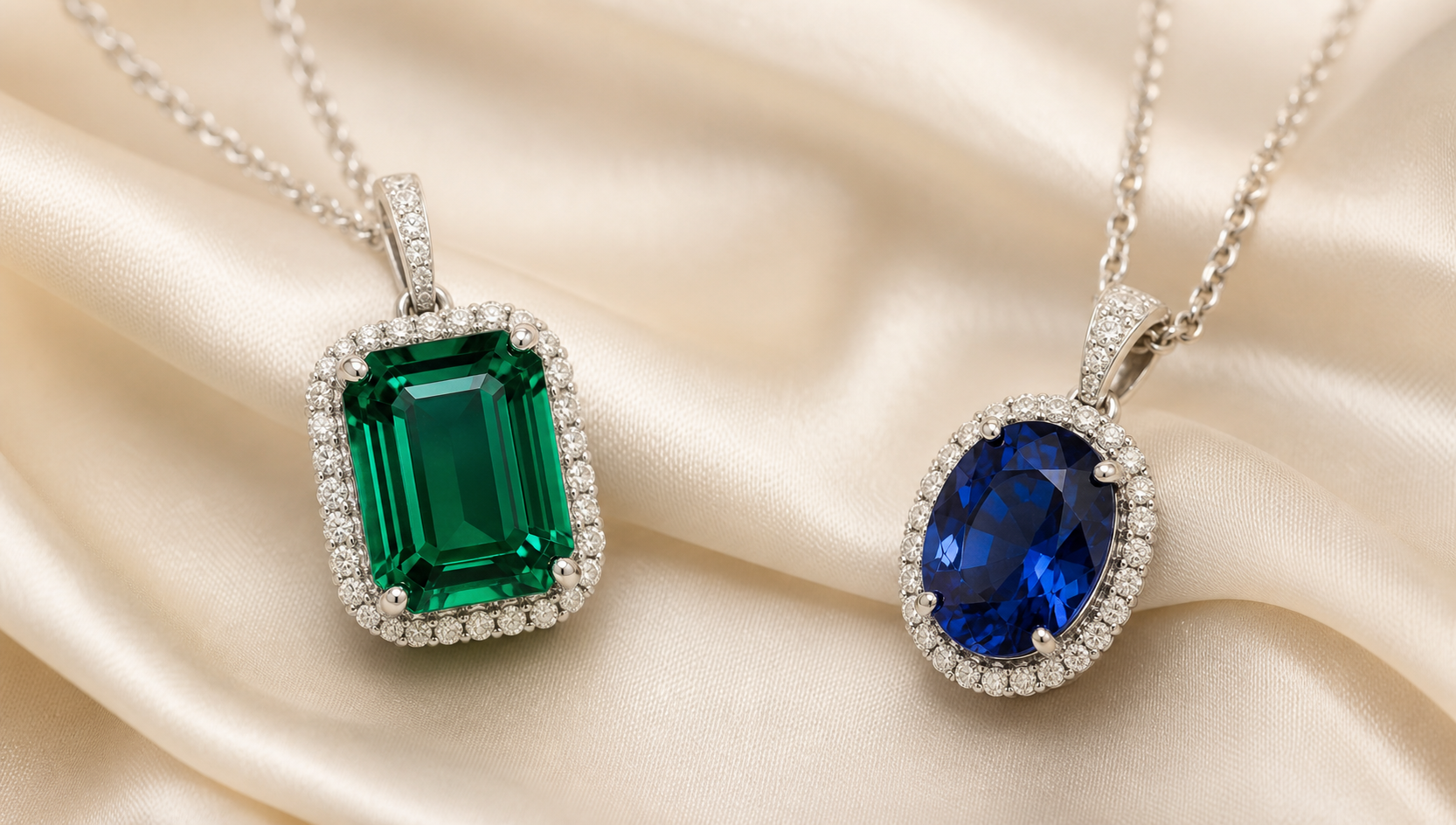
Begin with the feeling you want. Emerald, from a light garden green to a deeper forest tone, tends to become the focal point of an outfit. It can lift black, ivory, tan, chocolate, dark denim, and soft pink. Blue sapphire is calmer at first glance but never plain: a well-cut royal or cornflower blue looks crisp with white gold, silver, navy, gray, cream, and denim. If your wardrobe already leans toward navy, charcoal, and white, sapphire often feels like a natural extension. If your clothes are mostly simple neutrals, emerald can supply the color.
Durability is the main practical difference. Sapphire, a member of the corundum family, is well suited to rings and bracelets that meet the world often. It still deserves sensible care—removing it for sport, swimming, cleaning, and heavy work—but it gives a busy wearer easier confidence. Emerald also works beautifully in fine jewelry, yet it asks for a more deliberate routine and a secure setting. Pendants and earrings are especially graceful ways to enjoy emerald, while a ring needs more care around knocks and chemicals.
Silhouette matters as much as stone. Rings show color instantly but take the most contact. Pendants sit away from impact and let color show against the neckline, making them an easy first colored-gemstone piece. Bracelets give the wearer a frequent flash of color, provided the clasp is secure and the fit is comfortable. Earrings place color near the face without requiring a large stone, with studs for work and drops or halos for evening.

Metal changes both stones. White metals sharpen sapphire and create a clean, modern contrast with emerald. Yellow gold warms both, giving emerald a more vintage character and adding warmth to blue. Before buying, picture the stone with three outfits you already own, check whether the metal matches jewelry you wear often, and decide whether a smaller accent will actually leave the box more often than a large statement stone. For a gift, a pendant or bracelet avoids ring-size questions.
In short, choose emerald when expressive green is the attraction and you are happy to care for it thoughtfully. Choose sapphire when you want a versatile, durable color for frequent wear.
Read the lab-grown emerald versus blue sapphire comparison for the full original article, and visit Lumingem to explore the wider collection.


Comments
Post a Comment